


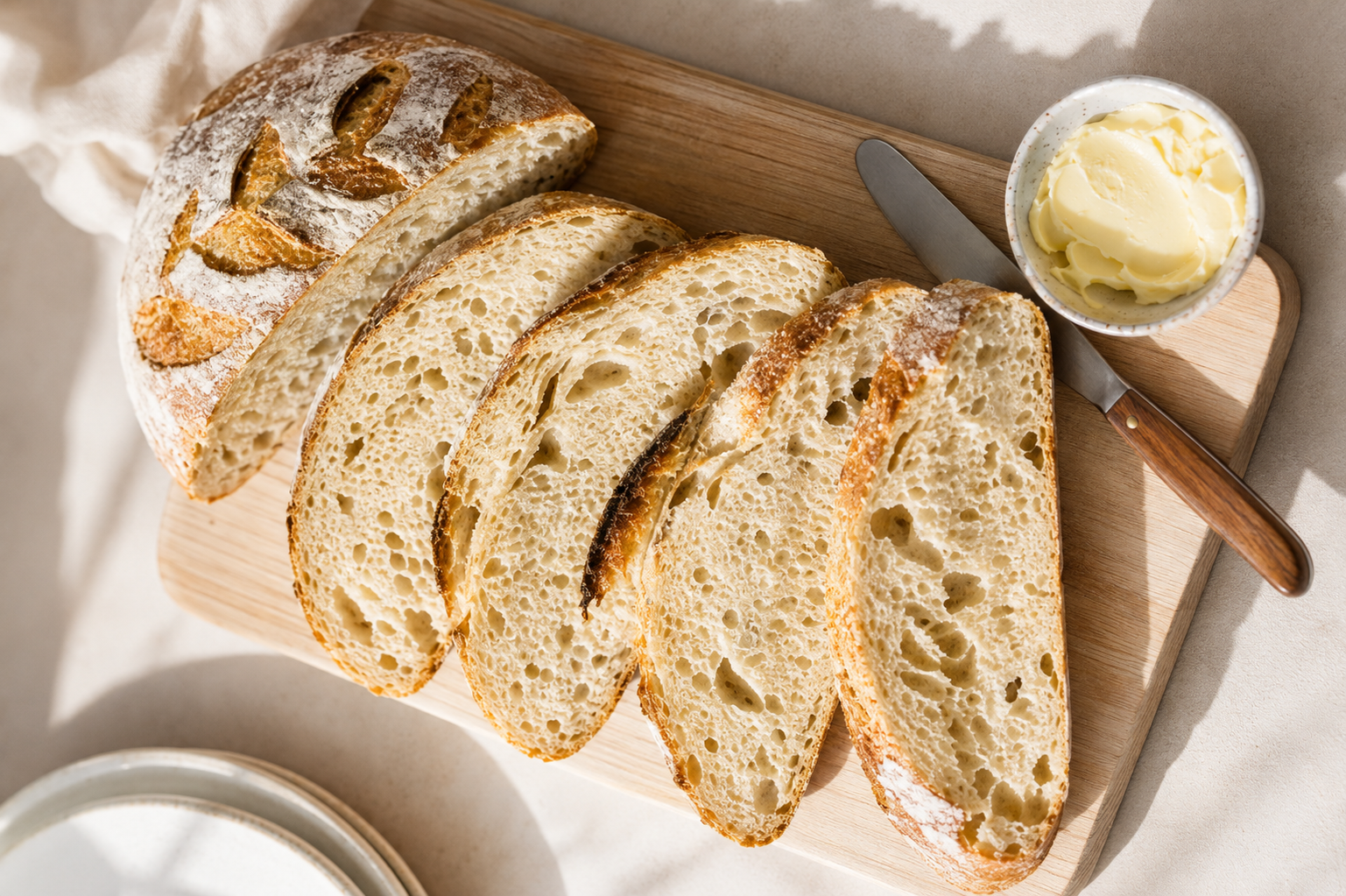
Sourdough has become one of the world’s most popular artisan breads, appearing in cafés, bakeries, and restaurants across the globe. Known for its crisp crust, chewy texture, and naturally tangy flavour, sourdough is made using a traditional fermentation process rather than commercial yeast. Whether you’re curious about why sourdough is different or considering learning how to bake it yourself, this guide explains everything you need to know from how it’s made to its potential benefits and the best ways to enjoy it.
What Is Sourdough?
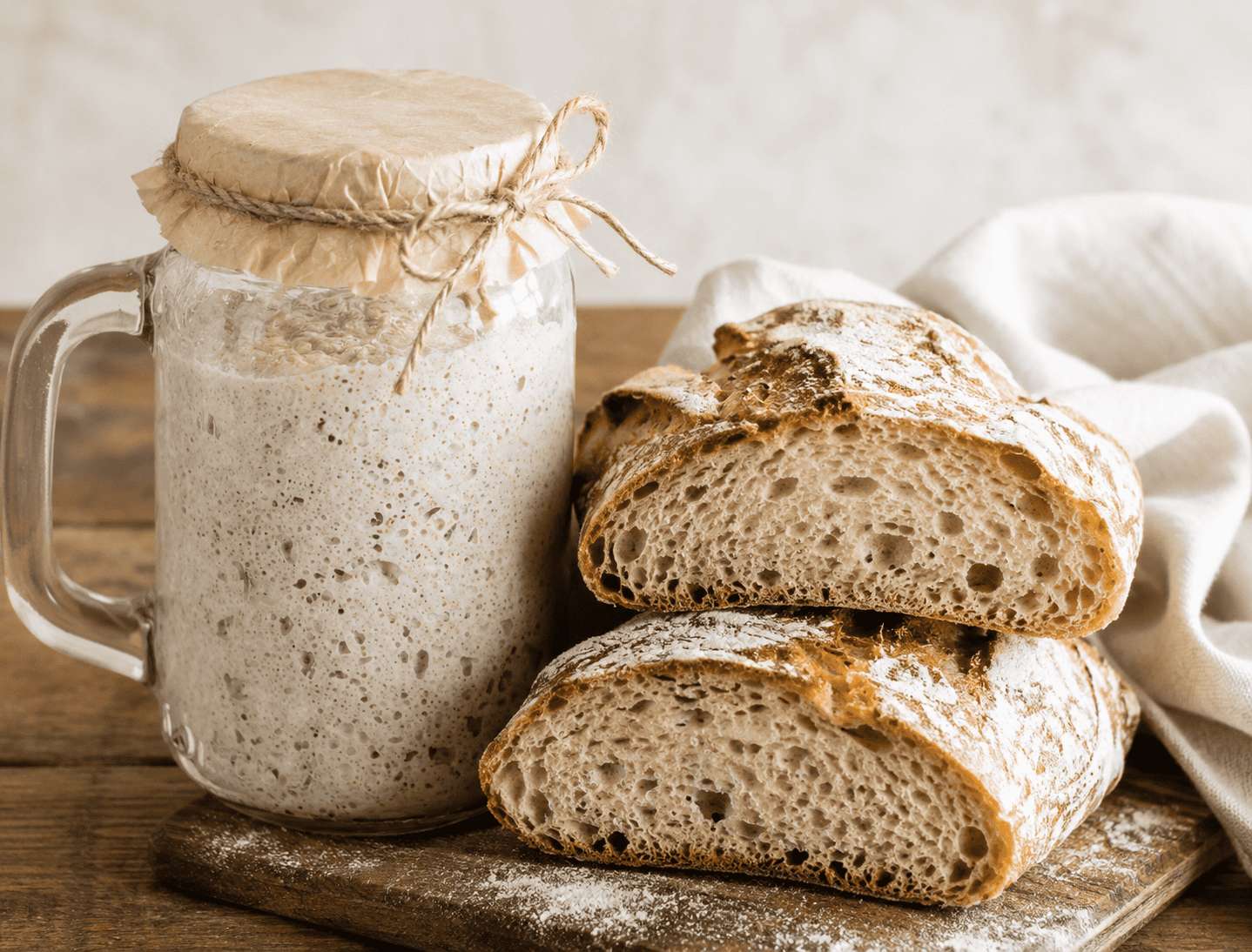
Sourdough is bread made using a natural sourdough starter, a mixture of flour and water that ferments with wild yeast and lactic acid bacteria found naturally in the environment. Unlike commercial yeast, which produces bread within a few hours, sourdough relies on slow fermentation. This process develops its characteristic flavour, aroma, and texture while requiring careful attention to time, temperature, and hydration.
A typical sourdough loaf is known for:
- Crisp golden crust
- Chewy interior
- Open, airy crumb
- Mildly tangy flavour
- Rich aroma
Sourdough vs Regular Bread
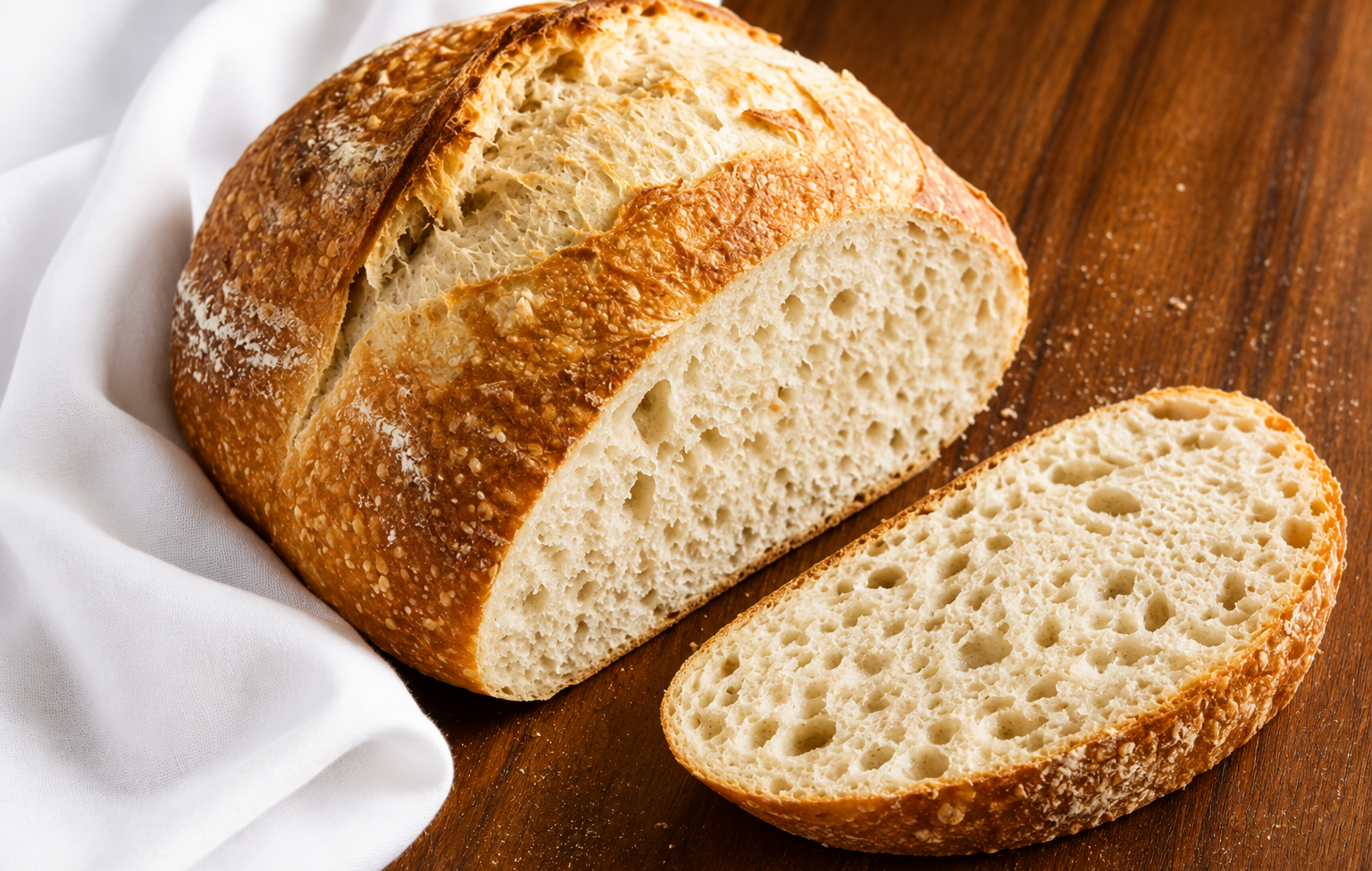
Although both use simple ingredients, the biggest difference lies in the fermentation process.
| Feature | Sourdough | Regular Bread |
| Leavening | Natural starter | Commercial yeast |
| Fermentation | 12–48 hours | 2–4 hours |
| Flavour | Complex and tangy | Mild |
| Texture | Crisp crust, chewy crumb | Softer texture |
| Baking | Requires fermentation management | Faster production |
The longer fermentation gives sourdough its distinctive artisan quality and depth of flavour.
Why Do People Like Sourdough?
Sourdough is still bread, but many people enjoy it because of the characteristics created during natural fermentation.
Easier to Digest
The fermentation process partially breaks down starches and proteins before baking. Many people find sourdough feels easier to digest than bread made with commercial yeast, although individual experiences may vary.
May Have a Lower Glycaemic Index
Some sourdough breads have a lower glycaemic index (GI) than conventional white bread, which may contribute to a slower rise in blood sugar when eaten as part of a balanced diet.
Better Mineral Availability
Natural acids produced during fermentation help reduce phytic acid, making minerals such as iron, magnesium, and zinc more available for absorption.
Naturally Stays Fresh Longer
The organic acids created during fermentation help slow mould growth, allowing sourdough to stay fresh longer without relying heavily on preservatives.
What Is Sourdough Made Of?
Traditional sourdough contains only four ingredients:
- Flour
- Water
- Salt
- A sourdough starter
Although the ingredient list is simple, producing consistent, high-quality sourdough requires precise control of fermentation, hydration, shaping, and baking.
Best Ways to Enjoy Sourdough
Its sturdy texture makes sourdough incredibly versatile.
Popular pairings include:
- Avocado and poached eggs
- Smoked salmon and benedict eggs
- Butter
- Homemade fruit jam
- Peanut butter and banana
- Cheese boards and charcuterie
- Soups and salads
- Bruschetta and open sandwiches

How to Store Sourdough
To keep sourdough at its best:
- Store it in a paper bag or wrapped in a clean cotton cloth.
- Keep it at room temperature for up to 2–3 days.
- Slice and freeze it if storing for longer.
- Refresh it by lightly spraying with water and reheating in the oven or air fryer to restore its crisp crust.
Learn to Make Authentic Sourdough
Making great sourdough is both an art and a science. From maintaining a healthy starter to mastering fermentation, shaping, scoring, and baking, every loaf requires patience, technique, and practice.
If you’d like to develop professional bakery skills, explore the bakery programmes at École Ducasse Nai Lert Bangkok Studio, where you’ll learn authentic artisan bread-making techniques through hands-on training with experienced chef instructors.
Discover our Bakery Arts Fundamentals
Line: @ecoleducassebkk