



Chef Alain Ducasse is one of the most influential figures in the culinary world — not only for his three-Michelin-star cooking, but for the sharp business instincts that shaped his entire career. From building a restaurant empire across continents to founding École Ducasse to pass on his knowledge to the next generation, his journey is as much a business story as it is a culinary one.
Set the technical cooking skills aside for a moment, and Ducasse’s career holds real lessons for anyone trying to generate their own food business idea. This article distills his life and philosophy into 5 practical takeaways.
1. Respect for Ingredients and Seasonality Is the Starting Point for Any Good Idea

Ducasse grew up on a farm in Castel-Sarrazin in southwestern France, surrounded by seasonal produce that shaped his understanding of natural flavor from a young age. That early understanding became the foundation for every dish — and every business — he would go on to build.
The lesson for anyone generating a food business idea: the strongest ideas rarely come from overly complex concepts. They come from a deep, genuine understanding of the ingredients and context you already know best. Starting from real expertise tends to produce far sturdier ideas than chasing something unfamiliar simply because it seems novel.
2. Treat Setbacks as Turning Points, Not Endings
In 1984, Ducasse narrowly survived a plane crash — an event that changed the course of his life. Rather than retreating, he channeled that experience into renewed determination, going on to become the first chef in history to hold three-Michelin-starred restaurants in three different cities.
For anyone starting a food business, the path is rarely smooth. Setbacks and failures along the way shouldn’t be treated as the end of an idea, but as valuable information that sharpens it for the next attempt.
3. Maintain the Same Standard, No Matter How Far You Expand
One of Ducasse’s most defining achievements was becoming the first chef to hold three-Michelin-starred restaurants simultaneously in three cities, including Paris and New York. The real challenge in that kind of expansion isn’t opening new locations, it’s keeping the same standard consistent everywhere you go.
This is a critical lesson for any food business idea with growth plans, whether that means opening additional branches or building out a franchise. What needs to be designed from day one is a system that protects quality and consistency, no matter how far the business scales.
4. Pass On Knowledge and Build a Team, Rather Than Doing It Alone
After decades of building his restaurant empire, Ducasse founded École Ducasse in 1999, with a mission to pass on his expertise and entrepreneurial mindset to a new generation rather than keeping that knowledge to himself.
For anyone developing a food business idea, this reflects an important truth: sustainable businesses rarely rely on the talent of one person alone. They rely on the ability to build a team and transfer knowledge so others can carry the work forward. A good idea should be designed to scale through people, not remain locked inside its founder’s head.
5. Tie the Business to Values That Go Beyond Profit
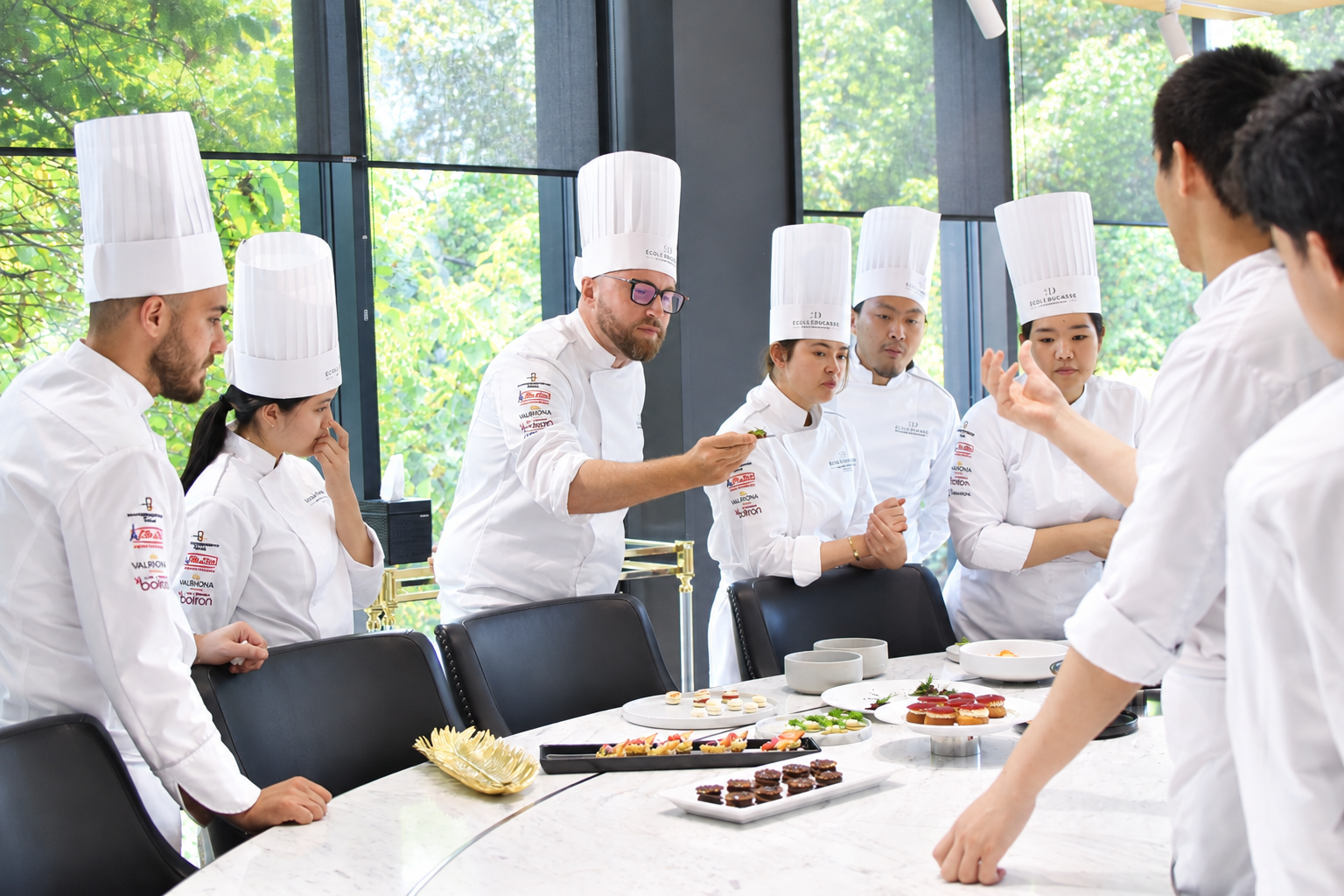
École Ducasse’s mission goes beyond teaching culinary technique; it also instills a sense of social and environmental responsibility in every student. It reflects a core belief for Ducasse: a good food business needs to stand for something greater than profit alone.
Food business ideas anchored in a clear set of values whether that’s sustainability, supporting local communities, or environmental responsibility tend to build deeper customer loyalty, and are more likely to endure than businesses that focus purely on the bottom line.
Interested in turning your own food business idea into reality? You can learn with us at École Ducasse Nai Lert Bangkok Studio.