


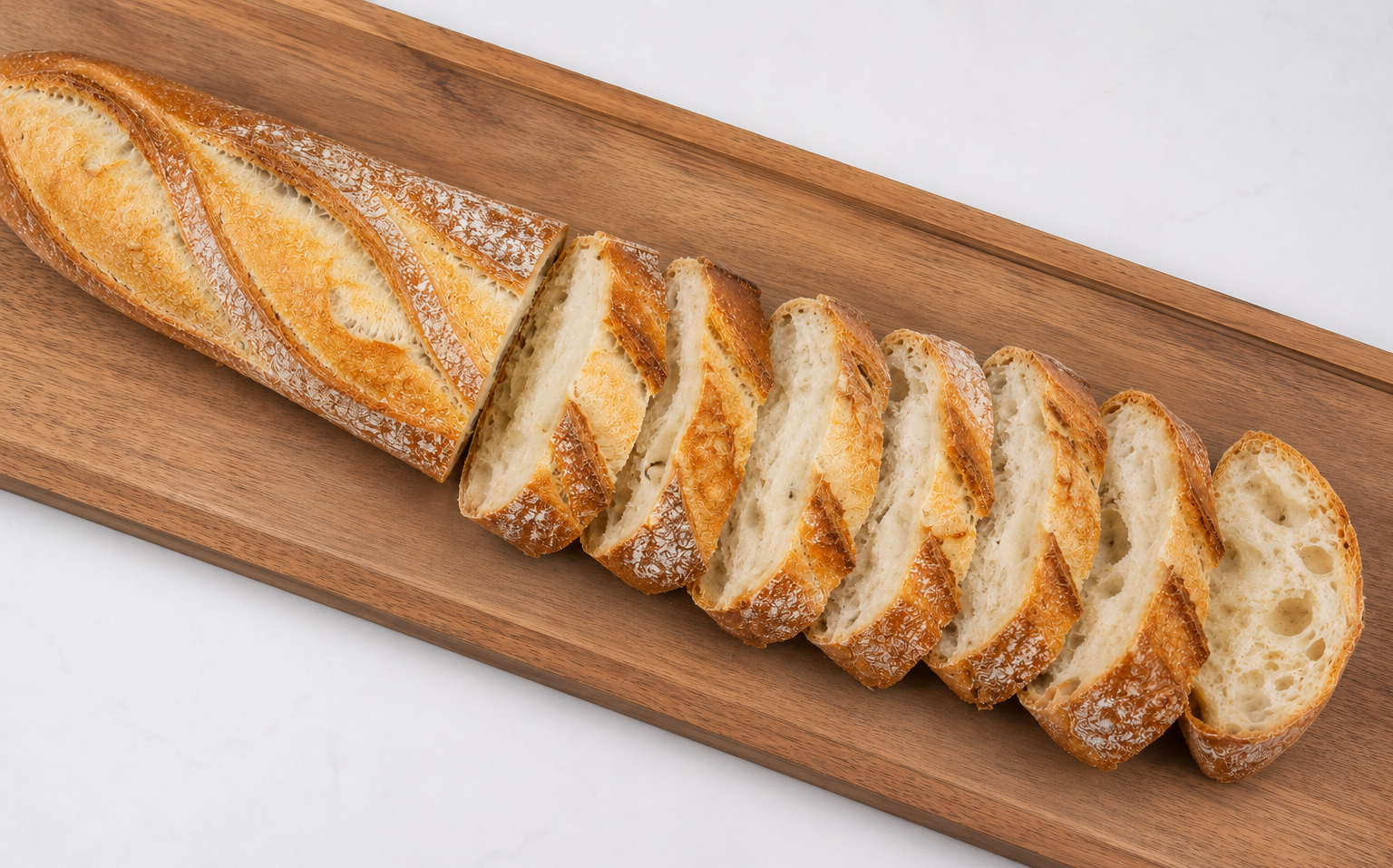
Few foods carry as much national identity in a single shape as the French baguette, the most iconic form of French bread. Long, narrow, and crackling with a golden crust, it is the loaf that lines Parisian bakery windows every morning and the one item most closely associated with French daily life. For anyone studying French baking, visiting a French bakery Bangkok, or simply curious about why this particular bread became a national symbol, understanding the baguette means understanding a piece of French culture itself: its history, the strict standards that protect it, and the craftsmanship required to bake one properly. This article walks through where the baguette came from, what separates an authentic loaf from an imitation, how it is traditionally eaten, and how the techniques behind it are taught in a professional kitchen today.
Where the Baguette Came From: A Shape Born of Necessity
The baguette’s long, thin shape is often assumed to be purely aesthetic, but its origins are practical. Bread historians point to several possible influences, from Napoleon-era bakers designing loaves that soldiers could carry more easily, to 19th-century Parisian ovens that favored a narrower shape for faster, more even baking. The name itself, French for “wand” or “stick,” only became standard much later. By the early 20th century, the baguette had become the everyday bread of Paris, replacing the rounder, denser loaves that had dominated French tables for centuries. Its rise coincided with changes in milling, yeast production, and oven technology that made a light, crisp, fast-baking loaf possible on a large scale for the first time.
What Actually Makes a Baguette “Authentic”
Not every long loaf sold as a baguette meets the standard the French associate with the real thing. A true French baguette is judged on a specific set of traits:
- Crust: thin, crisp, and deep golden, shattering gently when pressed rather than going soft within the hour
- Crumb: an open, irregular pattern of holes running through a chewy, slightly moist interior
- Flavor: a faint tang and depth built through slow fermentation, not shortcuts
- Weight: around 250 grams for a traditional loaf
- Length: roughly 65 centimeters
- Scoring: a diagonal slash pattern cut into the top before baking, allowing the loaf to expand properly in the oven
These are also the qualities that distinguish an authentic loaf from the mass-produced versions often found outside France, including at a quality French bakery Bangkok dedicated to traditional baking methods.
Inside France’s Law That Protects the Baguette
France takes its bread seriously enough to regulate it by law. Under the Décret Pain of 1993, a baguette sold as “traditionnelle” or “de tradition française” must be made on-site, without additives or preservatives, using only flour, water, salt, and yeast. It cannot be frozen at any stage of production. This decree exists specifically to protect bakers who maintain traditional methods against industrial competitors using shortcuts, additives, or pre-frozen dough. The distinction matters commercially and culturally: a baguette de tradition commands more respect, and often a higher price, precisely because the law guarantees a certain standard of craftsmanship behind it.
From Flour to Crust: How a Real Baguette Is Made
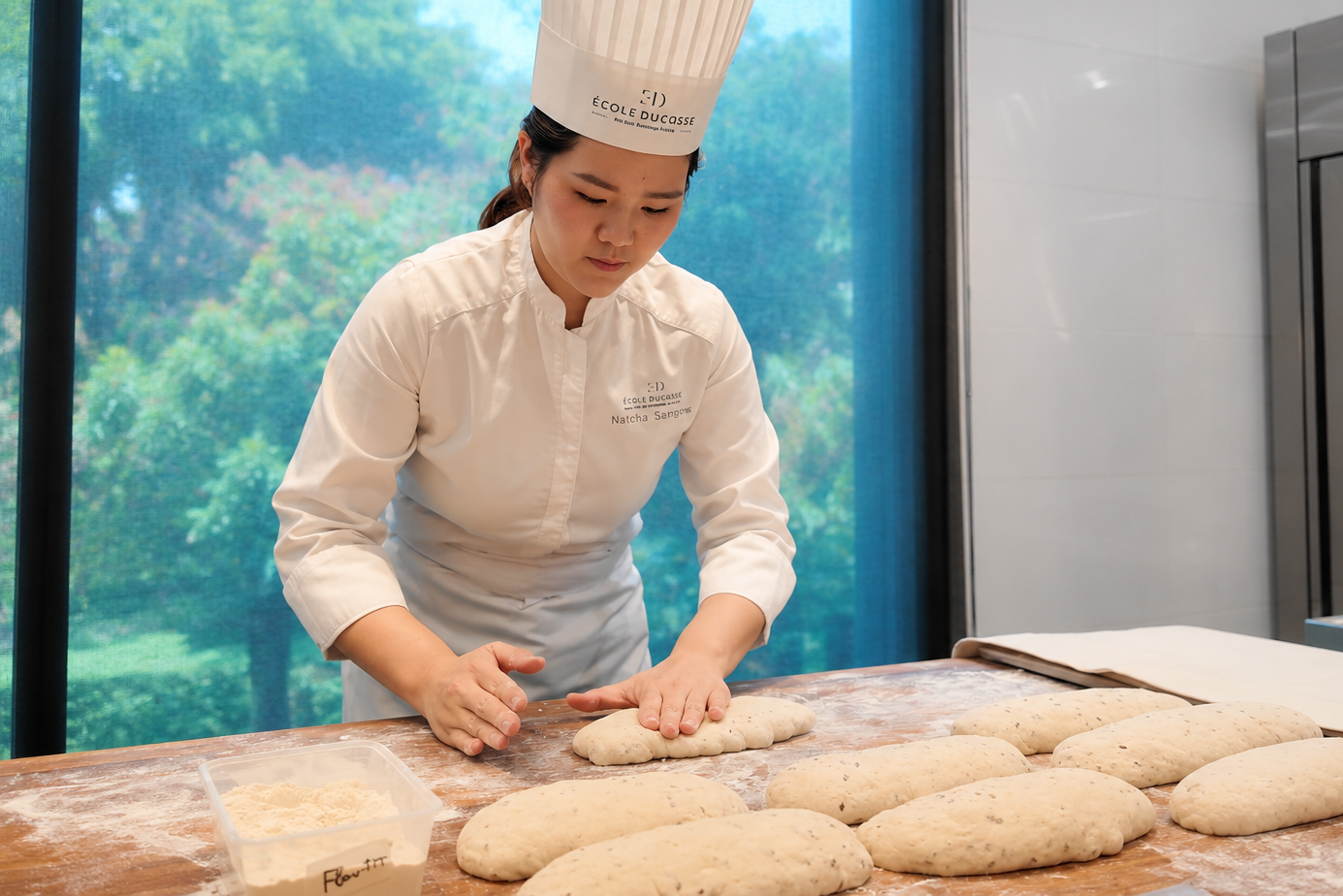
Making a proper baguette is a study in patience as much as technique. The process begins with a slow, cool fermentation that can stretch over many hours, allowing the dough to develop flavor and structure that speed cannot substitute for. Shaping is done by hand, rolling and stretching the dough into its signature elongated form without deflating the air pockets built up during fermentation. The scoring, those diagonal slashes across the top, is not decorative; it controls exactly how the loaf will expand and crack in the oven’s intense heat. Steam injected into the oven at the start of baking is what produces that glass-thin, blistered crust, while the interior sets into its open, irregular crumb. Every one of these steps depends on a baker’s judgment, not a fixed formula, which is why the craft takes years to master.
| Bread | Typical Length | Crust | Best Used For |
| Baguette | ~65 cm | Thin, crisp, golden | Sandwiches, everyday eating |
| Ficelle | ~40 cm, thinner | Extra crisp | Aperitifs, canapés |
| Boule | Round, ~20 cm diameter | Thick, chewy | Slicing for meals, longer freshness |
| Pain de Campagne | Round or oval, varies | Rustic, floured | Hearty meals, cheese boards |
Why the Baguette Still Matters in Everyday French Life
Beyond the bakery, the baguette remains woven into daily French routine. It is common to see loaves carried home under an arm on the walk back from the boulangerie, purchased fresh at least once, often twice, a day, since a real baguette begins losing its texture within hours of baking. This daily ritual is part of why the baguette was added to UNESCO’s Intangible Cultural Heritage list in 2022, recognized not just as a food but as a lived tradition and a marker of French identity passed down through generations of bakers and home cooks alike.
What to Eat with a Baguette
Part of the baguette’s staying power is how naturally it fits into almost any meal. Its neutral, slightly tangy flavor and contrast of crisp crust with soft crumb make it a flexible partner for both simple and refined pairings, including:
- Butter and jam for a classic French breakfast
- Cheese and charcuterie as part of an apéritif spread
- Olive oil, herbs, or tapenade for a light, savory starter
- Soups and stews, torn or sliced for dipping
- Ham, cheese, and butter for a simple jambon-beurre sandwich
- Wine, especially at the end of a meal alongside cheese
Learn to Bake a Real Baguette in Bangkok
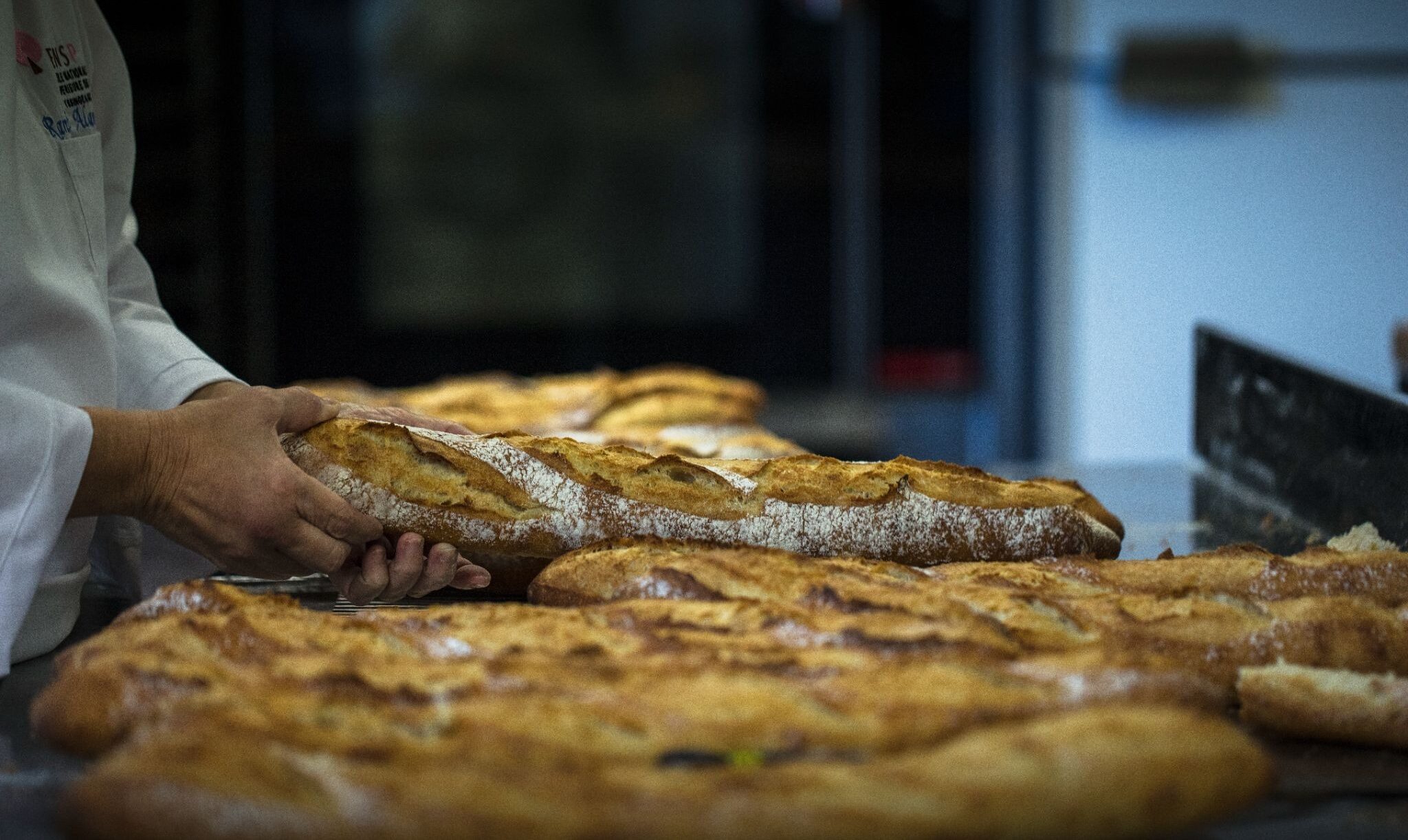
Understanding the theory behind a great baguette is one thing; developing the hands to actually shape, score, and bake one to a professional standard is another. For those inspired by the craftsmanship found in a leading French bakery Bangkok, learning directly from experienced chefs offers the best way to master the techniques. exactly what the bakery programme at École Ducasse Nai Lert Bangkok Studio is built to teach.
From baguettes and other classic loaves to Viennoiserie such as croissants and brioche, the curriculum follows the same methodology used across the École Ducasse network in France. Whether the goal is a professional certificate or simply the satisfaction of baking an authentic baguette at home, this is a direct path to learning the craft properly. Explore the Bakery Classes at École Ducasse Nai Lert Bangkok Studio →