


Source: https://marketeeronline.co/archives/258616
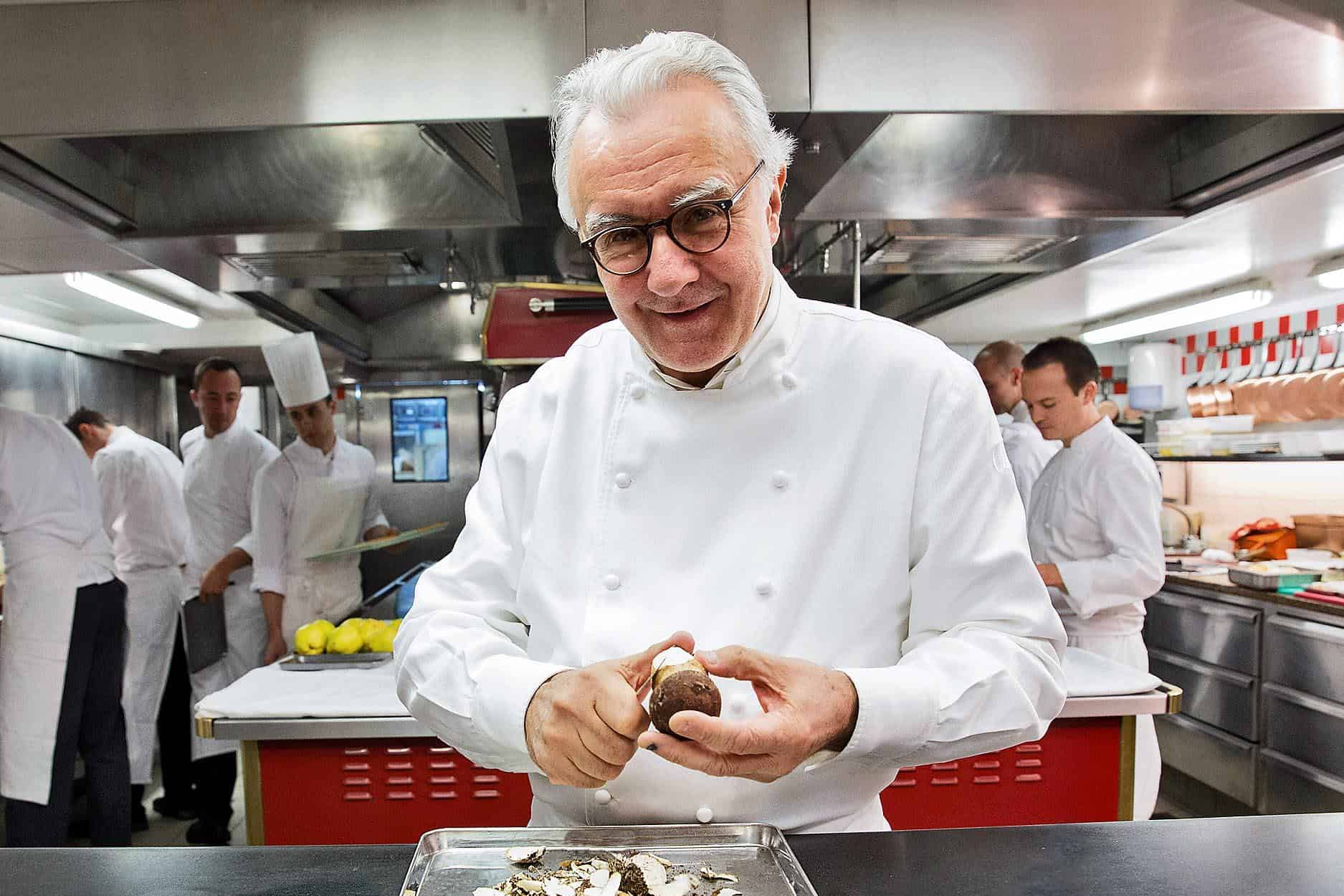
When it comes to the world of gastronomy, Alain Ducasse is a name synonymous with culinary excellence. Born in France and now a citizen of Monaco, he is one of the chefs whose restaurants have accumulated the most Michelin Stars in the history of the Michelin Guide. Beyond his achievements in restaurants, Ducasse has also played a major role in culinary education through École Ducasse, his international network of culinary and pastry schools, which has now established a presence in the heart of Bangkok.
This article explores Alain Ducasse’s remarkable journey, from his early years in the French countryside and his first experiences in professional kitchens to becoming one of the world’s most influential chefs and founding École Ducasse.
Early Beginnings: Growing Up in the French Countryside
Alain Ducasse was born on 13 September 1956 in Orthez, in southwestern France, and grew up on a farm in Castel-Sarrazin. His childhood surrounded by agriculture, fresh produce, and seasonal ingredients helped develop his appreciation for the natural flavours of food from an early age.
This connection with the land and seasonal produce later became an important foundation of his culinary philosophy, which places strong emphasis on respecting ingredients, seasonality, and the natural character of food.
Training Under Legendary Chefs
In 1972, at just 16 years old, Ducasse began his professional training at Pavillon Landais in Soustons while studying at a hotel school in Bordeaux. He later worked with renowned chef Michel Guérard in 1975 in Eugénie-les-Bains and also spent part of his training with celebrated pastry chef Gaston Lenôtre.
In 1977, Ducasse joined Moulin de Mougins as an assistant chef under Roger Vergé, one of the pioneers of the “Cuisine du Soleil” style. This experience exposed him to the flavours and techniques of Provençal cuisine and became an important stage in the development of his culinary identity.
In 1978, Ducasse also had the opportunity to work with Alain Chapel, another influential figure in French gastronomy who contributed to his professional development and culinary philosophy.
These experiences with some of France’s most respected culinary figures helped Ducasse take his first major step as a head chef. In 1980, he became head chef at L’Amandier in Mougins. The following year, he moved to La Terrasse at Hôtel Juana in Juan-les-Pins, where he earned his first two Michelin Stars in 1984.
A Life-Changing Moment: Surviving a Plane Crash
The year 1984 was both a year of professional achievement and a major turning point in Ducasse’s life. That same year, he was the sole survivor of a Piper Aztec plane crash that left him seriously injured.
The accident became a significant moment in his life, occurring at a time when his professional career was beginning to reach an international level.
Becoming a Global Culinary Icon: Three Michelin-Starred Restaurants in Three Cities
Source: https://marketeeronline.co/archives/258616
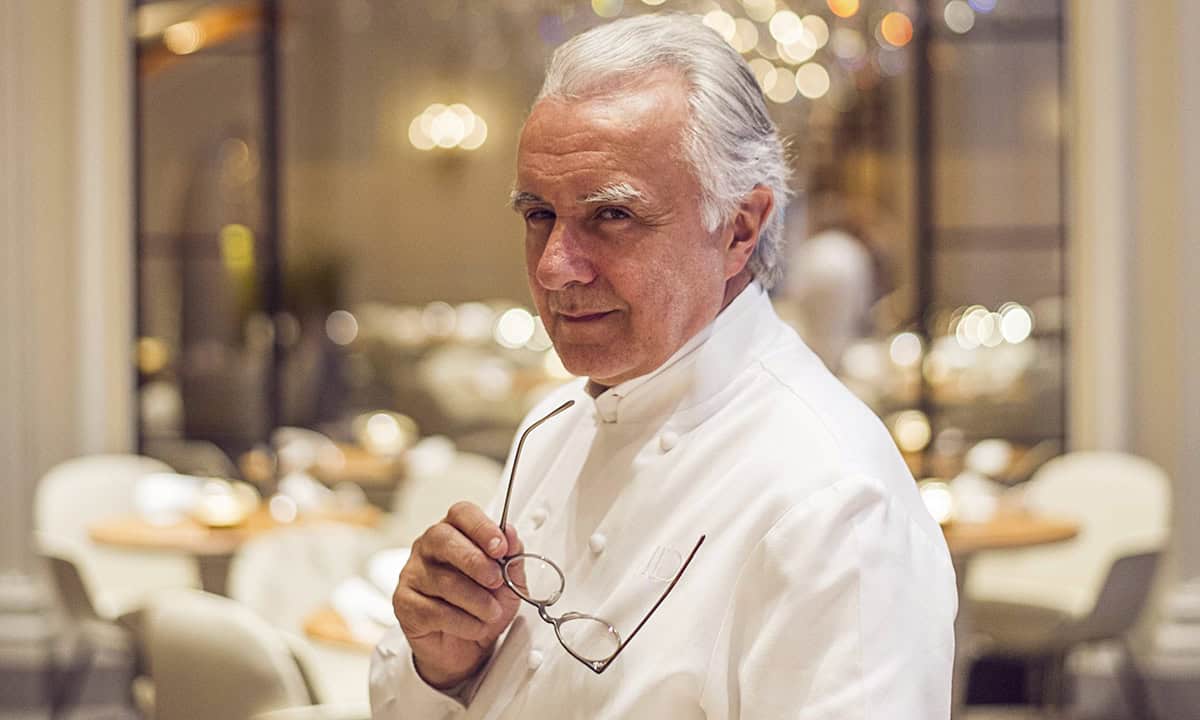
In 1986, Ducasse was invited to take charge of the kitchens at Hôtel de Paris in Monaco, including the renowned Le Louis XV. Two years later, in 1988, he expanded beyond restaurants by opening La Bastide de Moustiers, a boutique hotel in Provence.
In 1996, Alain Ducasse at Le Parc – Sofitel Demeure Hôtels in Paris opened and received three Michelin Stars within just eight months. In 2000, Ducasse expanded his culinary presence to New York with a restaurant at Essex House, which also received three Michelin Stars in 2005.
This achievement made Ducasse the first chef to have restaurants holding three Michelin Stars simultaneously in three cities: Monaco, Paris, and New York. It was a landmark achievement that further established his reputation on the international culinary stage.
His culinary empire continued to expand to cities including Las Vegas, Washington, D.C., London, Tokyo, Macau, and many others. Today, the Ducasse group encompasses restaurants and food-related businesses across several countries around the world.
In 2012, restaurants under his direction had accumulated as many as 21 Michelin Stars, placing him second only to chef Joël Robuchon at the time.
Beyond the restaurant industry, Ducasse has also cooked for major international occasions. In 2011, he was honoured to prepare the wedding banquet for Prince Albert II of Monaco. In 2013, he received the Lifetime Achievement Award from The World’s 50 Best Restaurants.
Why Did Alain Ducasse Establish a Culinary School?
After building a global restaurant empire, an important question remained: how could the knowledge, expertise, and culinary philosophy he had developed throughout his career be passed on to future generations?
This became the foundation for his vision of creating a culinary school. For Ducasse, cooking is not only about technical skill. It is also about sharing knowledge, developing expertise, and passing on a broader vision of gastronomy to the next generation.
In 1999, Alain Ducasse founded École Ducasse in Paris, France. The institution was created to share culinary and pastry expertise and to provide aspiring professionals with the knowledge and skills needed to pursue careers in the food industry, while encouraging excellence in practice, creativity, and respect for ingredients.
The Philosophy of École Ducasse: Combining Tradition with Contemporary Creativity
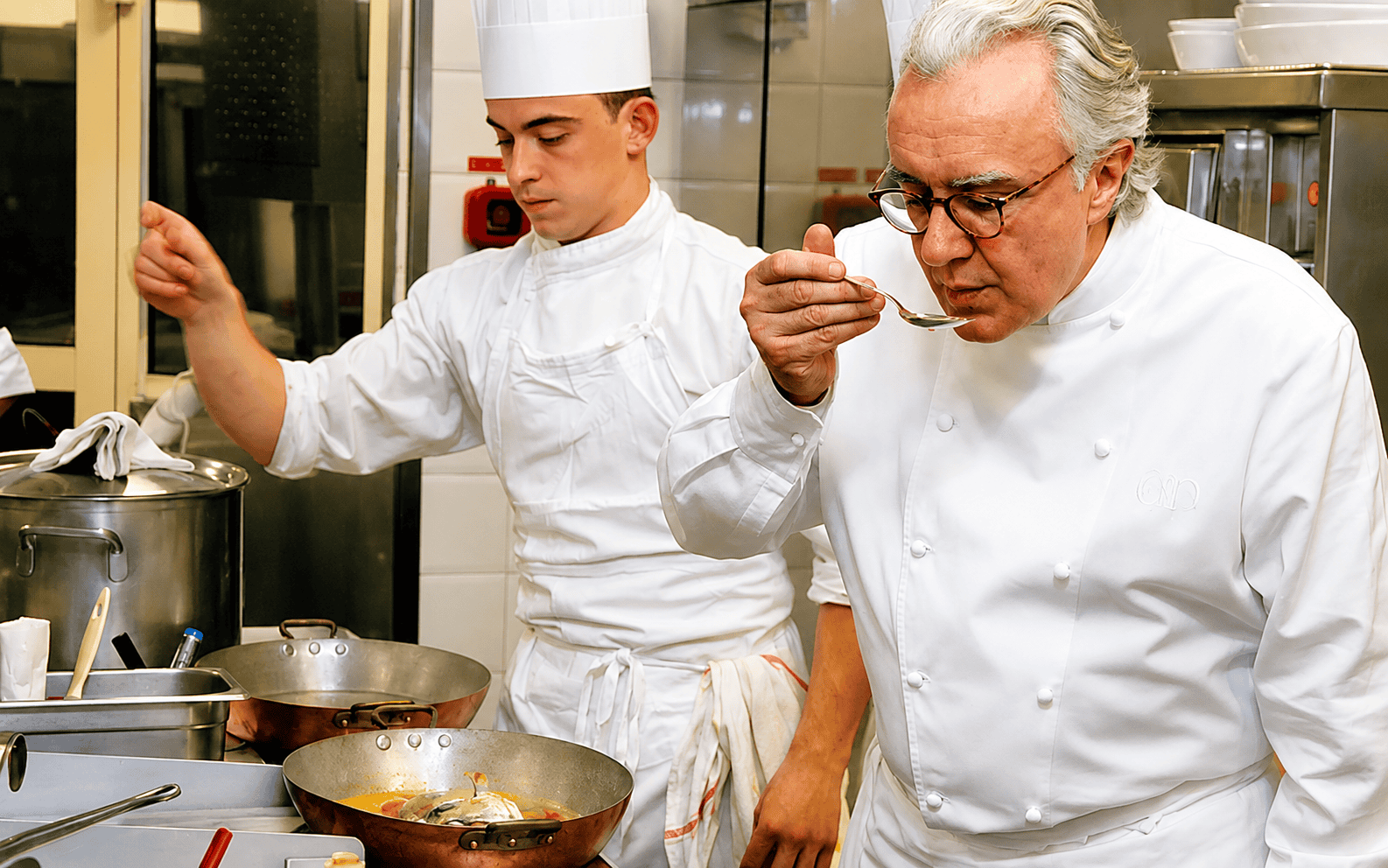
At the heart of École Ducasse is the combination of traditional French culinary techniques with contemporary creativity. Respect for ingredients and seasonality remains an important principle, reflecting the values Ducasse developed from his early childhood in the French countryside.
Students are not only trained in advanced culinary and pastry techniques but are also introduced to concepts of responsibility and sustainability within the food industry.
With its distinctive educational philosophy and professional approach to training, École Ducasse has gained international recognition. In 2023, École Ducasse Paris Campus was named World’s Best Culinary Training Institution by the World Culinary Awards.
From Paris to the World: The Expansion of École Ducasse
Following its success in Paris, École Ducasse expanded its network across different regions of the world.
In France, the network includes the Paris Campus in Meudon and École Nationale Supérieure de Pâtisserie, dedicated specifically to pastry education. Internationally, École Ducasse has expanded to locations including Manila in the Philippines, Gurugram in India, Bangkok in Thailand, Abu Dhabi in the United Arab Emirates, and Cairo in Egypt.
Among these international locations, Bangkok has become an important destination for culinary education in Southeast Asia.
How Did École Ducasse Come to Bangkok?
The arrival of École Ducasse in Bangkok was made possible through a collaboration between Alain Ducasse and Nai Lert Group, a Thai business group with a long history.
The project was driven by Naphaporn Bodiratnangkura, the fourth-generation member of the Nai Lert family and CEO of Nai Lert Group, with the vision of elevating culinary education in Thailand to an international level and providing students with access to the knowledge and philosophy associated with one of the world’s most renowned chefs.
The collaboration brings together French culinary expertise and the character of Thai hospitality. In December 2022, École Ducasse Nai Lert Bangkok Studio officially opened its doors inside Nai Lert Park in central Bangkok.
Since then, the studio has become a destination for culinary and pastry education, welcoming aspiring professional chefs, food enthusiasts, and entrepreneurs looking to develop their skills and knowledge in the food industry.
Highlights of École Ducasse Nai Lert Bangkok Studio
École Ducasse Nai Lert Bangkok Studio was designed as a professional learning environment equipped with modern facilities, including:
- Kitchen Laboratory – a dedicated space for students to develop essential culinary skills.
- Pastry, Chocolate & Ice-Cream Laboratory – specialised facilities for pastry, chocolate, and ice-cream training.
- Organic Edible Garden – a garden where students can engage with fresh produce and explore ideas related to farm-to-table practices and sustainability.
- Short Course Studios – spaces designed for intensive short-term culinary and pastry learning.
- Café and Boutique – areas where students can experience the connection between culinary skills, products, and entrepreneurship.
- Chef’s Table and Wine Cellar – spaces designed for special dining experiences and professional culinary events.
The studio offers a wide range of programmes, from short courses for beginners to longer programmes such as the Culinary Arts Diploma and Intensive Programs for those looking to develop professional culinary skills or pursue a career in the food industry.
Private courses are also available for businesses, organisations, and individuals seeking specialised training. Courses are delivered by professional chefs and food specialists with experience in the culinary industry.
Conclusion
From a young boy growing up on a farm in the French countryside to a chef whose restaurants have accumulated some of the highest numbers of Michelin Stars in culinary history, Alain Ducasse’s journey reflects a philosophy that goes far beyond technical skill.
His commitment to excellence, knowledge, ingredients, and culinary education ultimately led to the creation of École Ducasse in 1999, providing a platform to share his expertise and vision with future generations around the world.
Today, the knowledge and philosophy inspired by Alain Ducasse have reached the heart of Bangkok through École Ducasse Nai Lert Bangkok Studio. The studio gives students and food enthusiasts in Thailand the opportunity to develop their culinary and pastry skills in a professional learning environment, while experiencing an approach that brings French culinary expertise together with the distinctive character of Thailand.