


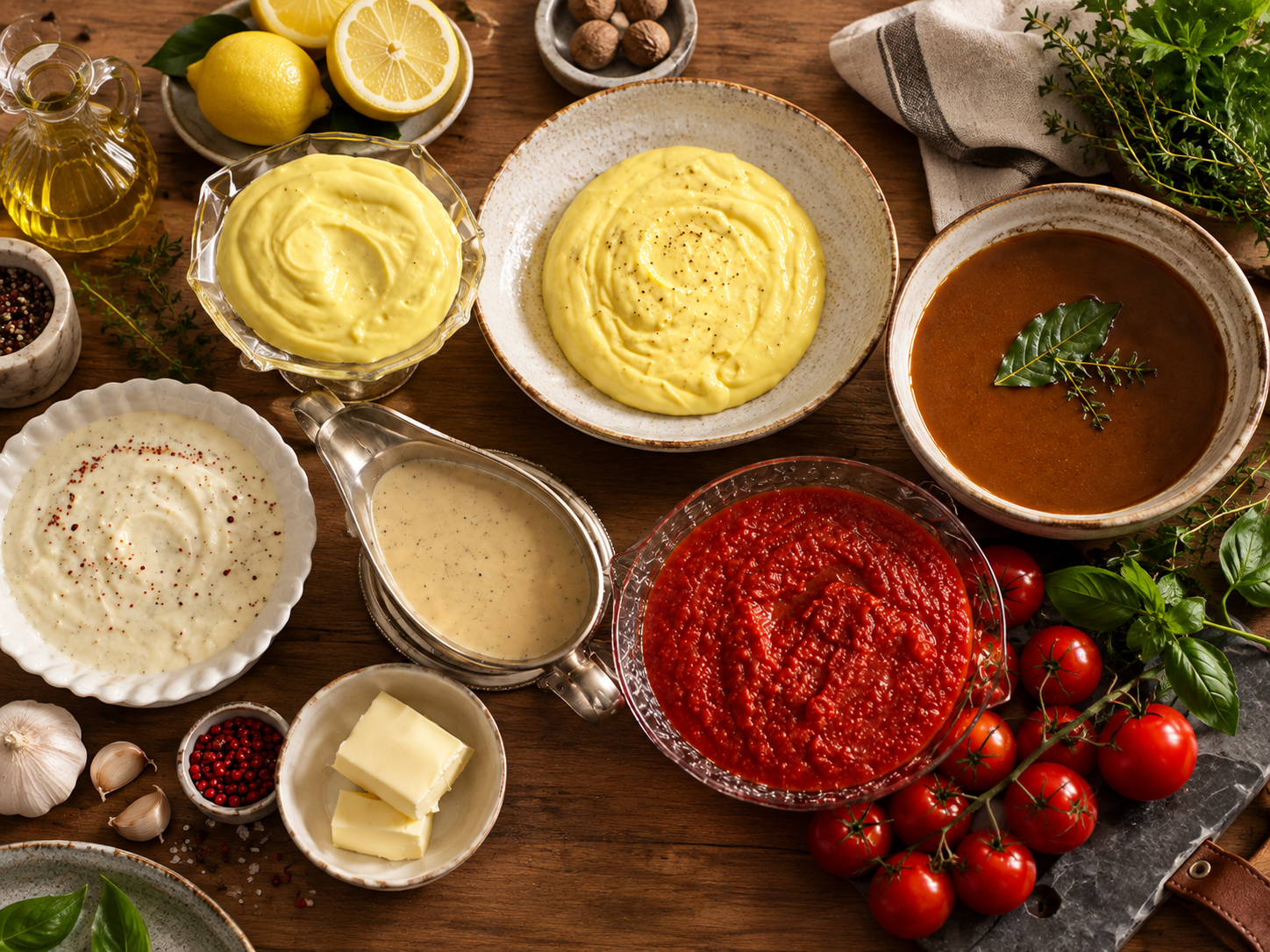
If one thing sets French cuisine apart from every other culinary tradition, it’s the sauce. While many cultures rely on spice blends or fermentation to build flavor, French cooking has always centered on the meticulous craft of sauce-making — a skill so foundational that every professional chef is expected to master it.
Understanding French sauces deeply isn’t just about memorizing recipes. It’s about understanding the underlying structure that nearly all of French cuisine is built upon.
The Origins of the French “Mother Sauces”
The concept of the Sauces Mères, or “mother sauces,” was formally codified by Chef Auguste Escoffier, the culinary master behind the Brigade de Cuisine kitchen system still used around the world today. Escoffier organized French sauces into five core categories, viewing them as templates from which hundreds of other sauces could be built, simply by adjusting the ingredients or technique.
Mastering these five mother sauces is, in many ways, like learning the alphabet before you can write a sentence. Once the underlying principles are understood, building out into other sauces becomes systematic and predictable rather than guesswork.
The 5 Mother Sauces of French Cuisine
1. Béchamel — The White Sauce
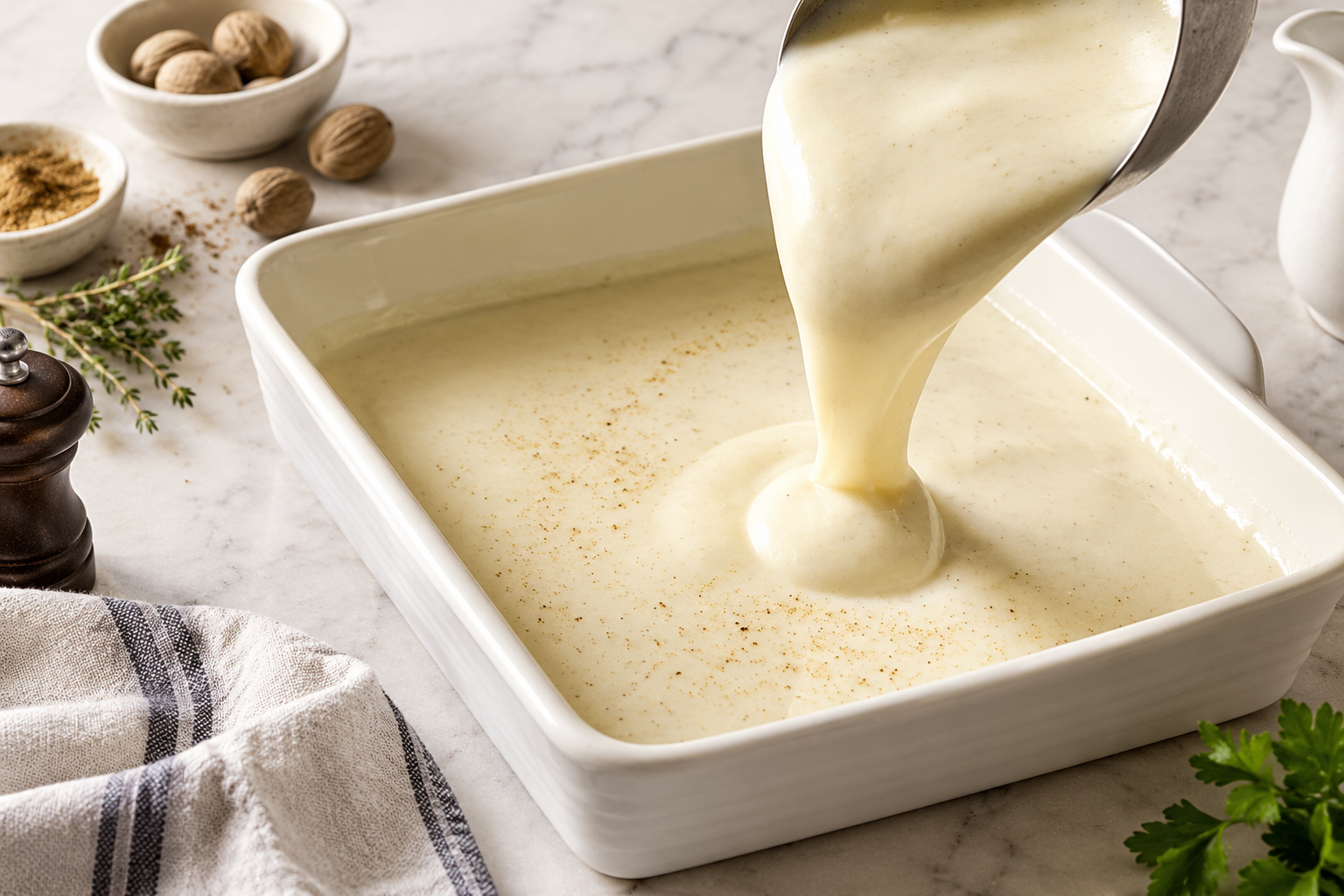
Béchamel is the most fundamental of the mother sauces, made by cooking butter and flour together into a roux, then gradually whisking in milk until smooth and velvety. It has a gentle, comforting flavor and forms the base of well-known dishes like Sauce Mornay (with cheese added) and classic French gratins and lasagnes.
2. Velouté — The Light Stock-Based Sauce
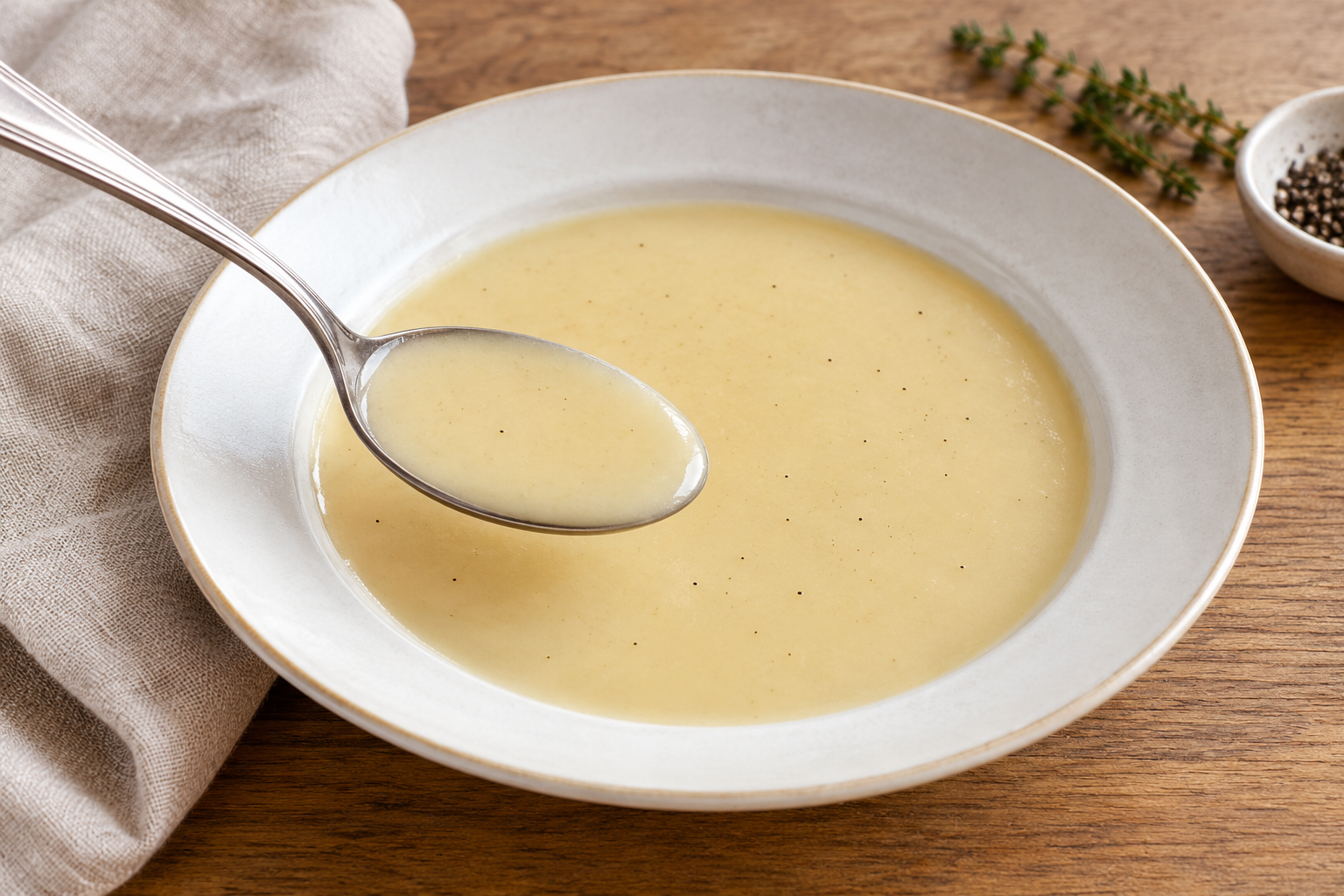
Velouté follows the same roux-based technique as béchamel, but uses a light stock — chicken, fish, or veal — instead of milk. The result is a delicate sauce that pairs particularly well with poultry and fish. One of its most famous derivatives is Sauce Suprême, enriched with fresh cream for added depth.
3. Espagnole — The Rich Brown Sauce
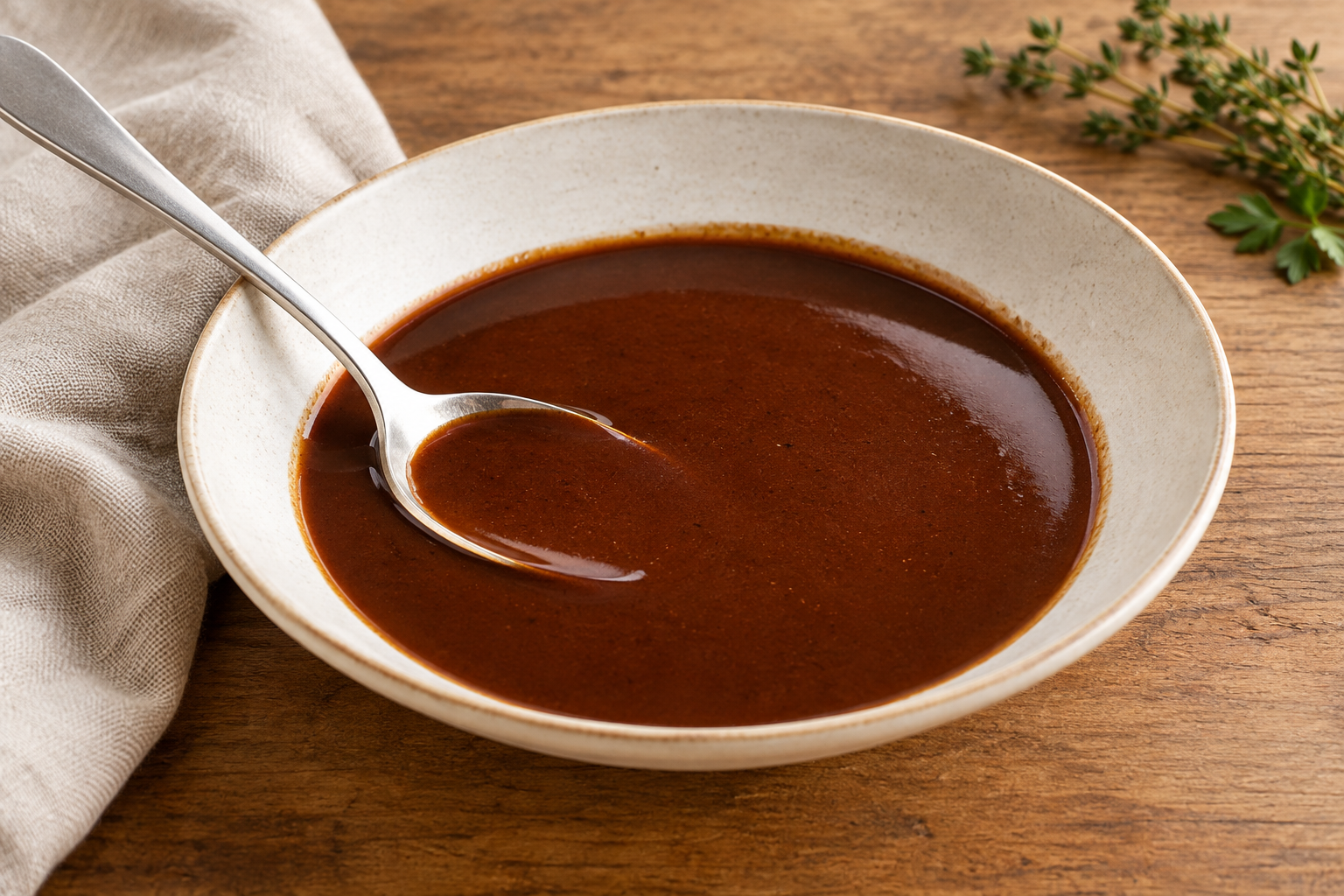
Espagnole is a dark, deeply flavored sauce made from rich brown stock, a dark roux, and tomato. It forms the base of Demi-glace, made by reducing espagnole further with additional stock until it’s concentrated to half its original volume — arguably the most intense of all French sauces, and a classic pairing for premium cuts of red meat.
4. Sauce Tomate
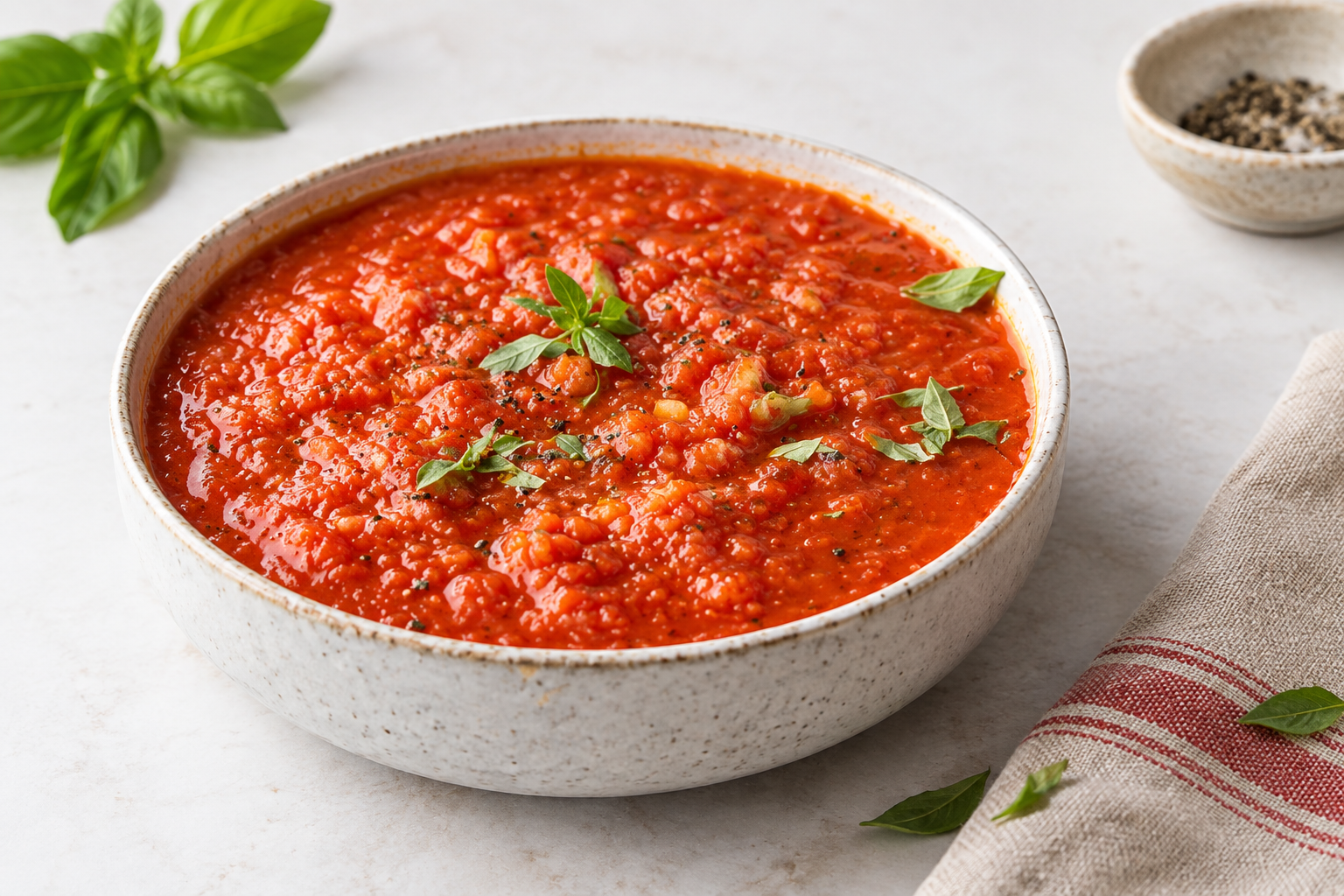
Though it looks simpler than the others, French-style tomato sauce has its own distinct technique, quite different from its Italian counterpart. It typically begins with rendering pork fat or bacon before adding tomatoes, vegetables, and herbs, then simmering until rich and balanced. It’s often used as a base for dishes that need a bright, slightly sweet-and-sour contrast to heavier meats.
5. Hollandaise — The Egg and Butter Emulsion
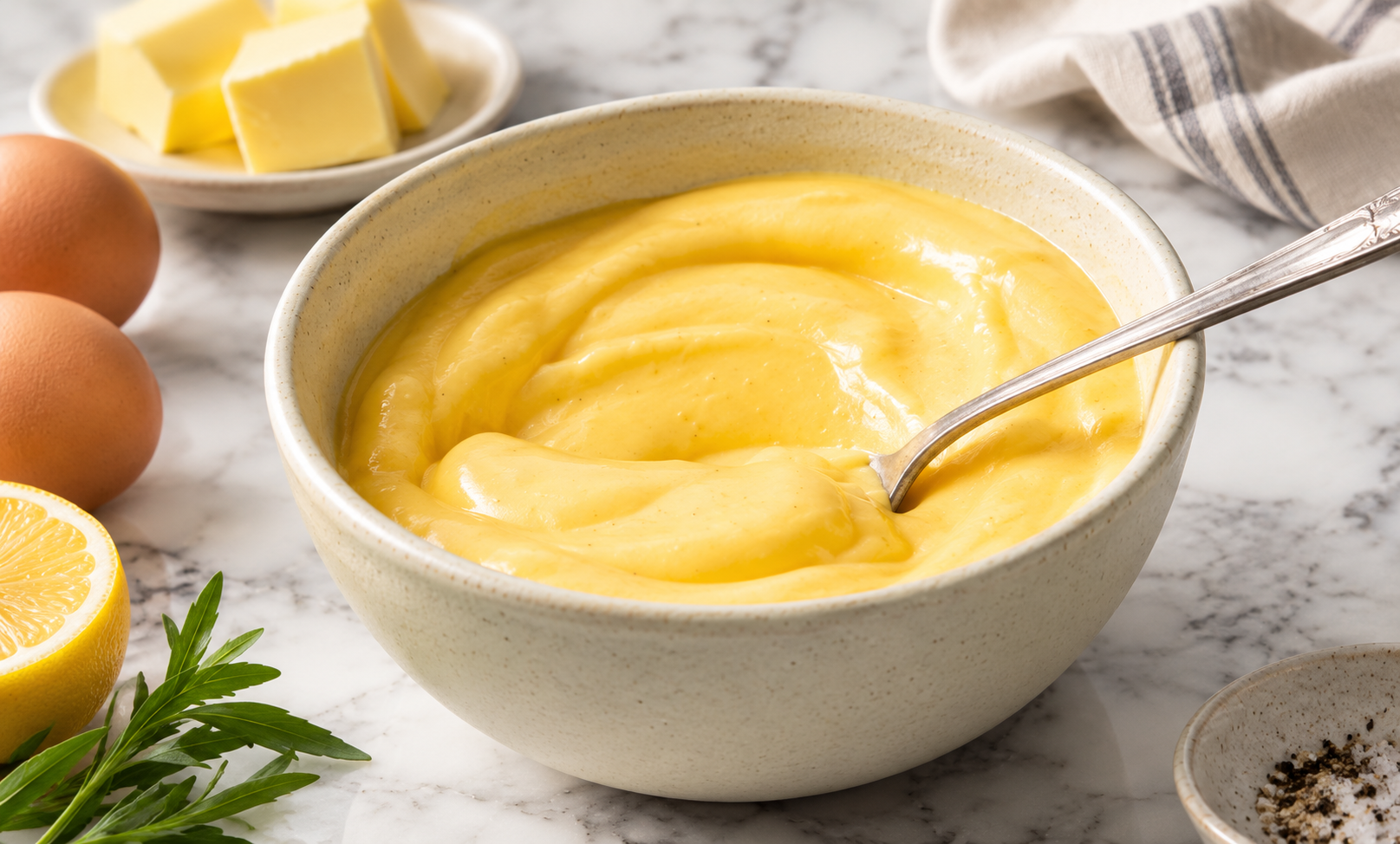
Hollandaise is the most technically demanding of the five mother sauces, made by slowly whisking egg yolks with melted butter until they emulsify into a rich, silky cream. Even a slight misstep in temperature or timing can cause the sauce to split, which is why it demands real precision and skill. Hollandaise is the classic accompaniment to eggs Benedict and steamed vegetables, and it’s also the base for Sauce Béarnaise, which adds vinegar and fresh herbs for a sharper, more aromatic finish.
Why Every Chef Needs to Understand the Mother Sauces
Mastering the five mother sauces isn’t just a skill for French cooking specifically — it’s training in the fundamental principles of sauce-making itself: temperature control, emulsification, and reduction to concentrate flavor. These are techniques that apply far beyond French cuisine, with essentially limitless room for adaptation.
This is exactly why culinary schools around the world still teach the mother sauces as one of the very first lessons for every student. Once this foundation is truly understood, everything more advanced tends to follow naturally.
Interested in mastering the art of traditional French sauces from real experts?
École Ducasse Nai Lert Bangkok Studio offers an intensive culinary program that builds this foundation, from sauce-making through to more advanced techniques.